What Is PDRN in Skincare -And Why Most of It Comes From Salmon
PDRN is polydeoxyribonucleotide. Which is a very long word for something that's actually straightforward.
It's made of small DNA fragments. And the reason skincare cares about it comes down to what happens when those fragments meet your skin cells.
Your skin cells have receptors called adenosine A2A receptors. When PDRN binds to them, it triggers a repair response - the cell starts producing more collagen, inflammation settles down, renewal speeds up. The signal it sends is essentially: it's time to fix things.
This isn't new science. PDRN has been used in wound healing and medical tissue regeneration for years. Korean beauty just figured out how to put it in a bottle that people use every morning.
So where does it actually come from?
This is the part most brands skip over. The PDRN in the majority of Korean skincare products and most global products that contain it is extracted from salmon milt. That's the sperm-containing fluid of male salmon.
From a pure chemistry standpoint, it works. Salmon DNA is close enough to human DNA that the fragments bind to the same receptors and trigger the same repair response. That's not in dispute.
But for a lot of people those following plant-based or vegan routines, or those who've just started reading ingredient labels more carefully this is uncomfortable information. And for Indian consumers specifically, who are increasingly particular about the sourcing and ethics of what goes on their skin, it's a real consideration.
So the question the industry had to answer: is there a version of PDRN that isn't derived from salmon?
Vegan PDRN is not a substitute, but an upgrade
The answer is yes. And the version that exists doesn't ask you to trade efficacy for ethics.
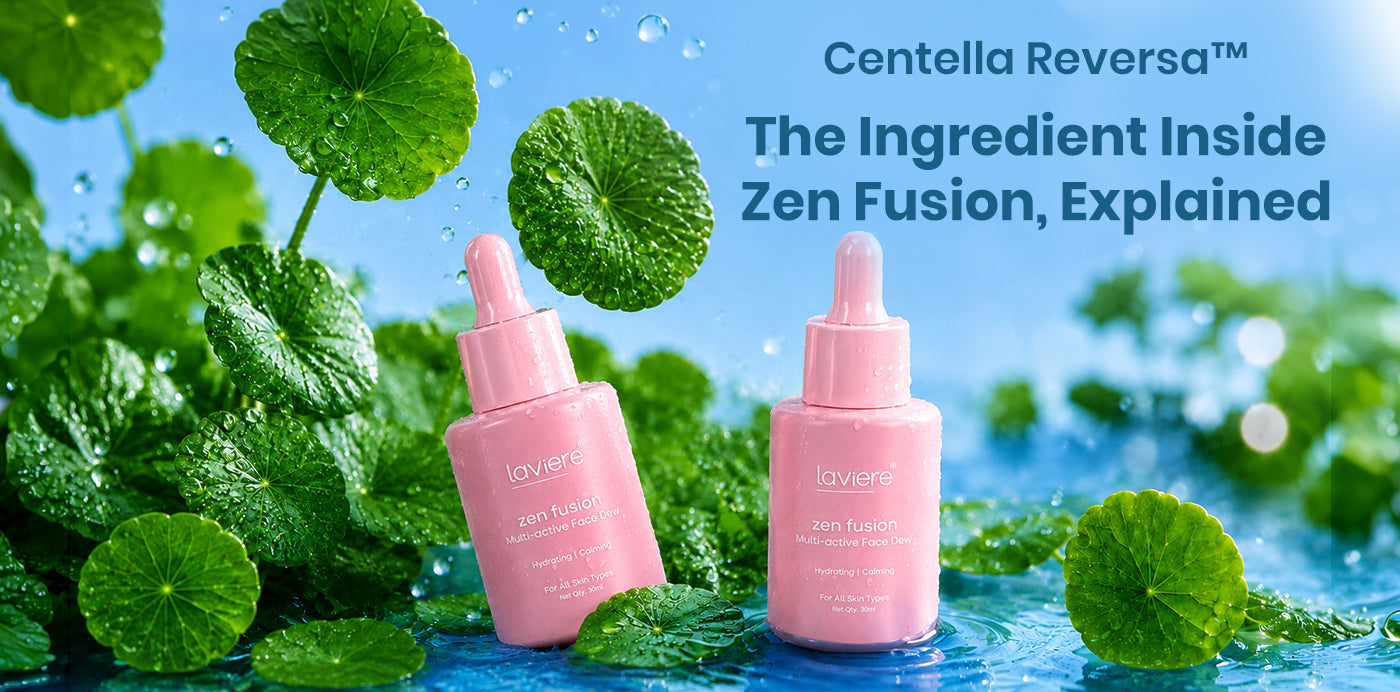
Centella Reversa™ is a patented ingredient that delivers vegan PDRN grown from Centella asiatica plant stem cell cultures, the same plant behind the CICA active that's been huge in K-beauty for years. No animal involvement. 100% natural origin. COSMOS-approved and preservative-free.
In independent testing, it outperformed salmon-derived PDRN by 7% on cell renewal. So it's not a compromise version. It's a better one.
What does this mean for Indian skin?
Indian skin has a melanin-rich composition that reacts differently to inflammation- specifically, any skin disruption has a stronger tendency to leave lasting dark marks. PIH, or post-inflammatory hyperpigmentation, is the mechanism behind this.
The anti-inflammatory action in Centella Reversa™- reducing redness by up to 45% in 28-day clinical testing- directly addresses this. Less inflammation means fewer triggers for the pigmentation response that's so common in Indian skin.
It's the reason this ingredient is at the centre of Zen Fusion. Not because vegan PDRN is a trending term, but because it's the right active for what Indian skin actually needs - and it happens to be cruelty-free.
The next blog goes into the specific ingredient - what Centella Reversa™ is, how the exosome delivery system works, and what makes it structurally different from anything else currently in skincare.
Frequently Asked Questions
1. What is PDRN?
PDRN stands for polydeoxyribonucleotide. Simply put, it consists of small DNA fragments that can interact with skin cells and support the skin's natural repair and renewal processes.
2. Why is PDRN used in skincare?
PDRN is known for its role in supporting skin repair. It interacts with specific receptors in the skin that are involved in processes such as collagen production, inflammatory response and cell renewal.
3. Where does traditional PDRN come from?
Traditional PDRN used in many skincare and regenerative applications is commonly derived from salmon DNA.
4. Is traditional PDRN vegan?
No. Since traditional PDRN is commonly sourced from salmon, it is not considered vegan.
5. What is vegan PDRN?
Vegan PDRN is a plant-derived alternative to traditional salmon-derived PDRN. In this case, Centella Reversa™ produces vegan PDRN using Centella asiatica plant stem cell cultures.
6. Is vegan PDRN as effective as salmon-derived PDRN?
According to the testing referenced for Centella Reversa™, its vegan PDRN showed a 7% higher cell renewal result compared with salmon-derived PDRN. Individual skincare results may vary.
7. What is Centella Reversa™?
Centella Reversa™ is a patented biotechnology ingredient made using Centella asiatica plant stem cell cultures. It provides a plant-based source of PDRN without animal-derived ingredients.
8. Why is vegan PDRN relevant for Indian skin?
Inflammation can contribute to visible concerns such as redness and post-inflammatory hyperpigmentation. The clinical testing referenced for Centella Reversa™ showed a reduction in redness, which may be relevant for people concerned about inflammation-related skin changes.
9. Is vegan PDRN cruelty-free?
Centella Reversa™ is designed as an animal-free, plant-derived ingredient, making it suitable for people looking for alternatives to salmon-derived PDRN.
10. Is PDRN suitable for everyday skincare?
PDRN is increasingly being used in skincare formulations designed to support skin repair and renewal. Always follow the product's directions for use and consider your individual skin needs.
11. Why is vegan PDRN used in Zen Fusion?
Zen Fusion uses Centella Reversa™ as a key active ingredient to provide a plant-derived approach to supporting skin renewal and addressing concerns linked to inflammation and visible signs of skin ageing.
12. What is the difference between regular PDRN and vegan PDRN?
The main difference is the source. Traditional PDRN is commonly derived from salmon, while vegan PDRN in Centella Reversa™ is produced using Centella asiatica plant stem cell cultures.

Written by Madhu Tiwari