Hydrating Serum for Dry Skin: How to Layer It So It Actually Works
Dry skin can feel like a leaky bucket. You apply a moisturizer in the morning and by lunch your cheeks are tight again, your foundation is catching on flakes, and your lips feel like paper. A hydrating serum for dry skin can make a real difference, but only if you understand what it does and what it can't do on its own.
Dry skin and dehydrated skin aren't the same
It's worth separating these two, because they need slightly different care.
Dry skin is a skin type. It naturally produces less oil, so the lipid layer that holds moisture in is thinner. It tends to feel rough, look matte, and flake easily, often year-round.
Dehydrated skin is a condition. It's short on water rather than oil, and it can happen to anyone, including those with oily skin. Tightness, fine lines that appear when you smile, and a dull, crepey look are classic signs.
Many people have both, especially in winter or in air-conditioned offices. A hydrating serum mainly addresses the water side; a moisturizer addresses the oil and barrier side. Dry skin needs both.
What a hydrating serum actually does
Serums are water-light formulas designed to deliver a high concentration of ingredients in a thin layer. Hydrating serums are built around humectants, ingredients that attract and bind water.
The ones worth knowing:
- Sodium hyaluronate, a form of hyaluronic acid, holds a large amount of water and gives skin an immediate plumper, smoother feel
- Glycerin, a humble but highly effective humectant
- Glyceryl glucoside, which supports the skin's natural moisture balance
- D-panthenol (pro-vitamin B5), which hydrates and soothes flaky, uncomfortable skin
- Rice ferment, used in Korean skincare to replenish and soften
Here's the catch: humectants attract water, but they don't lock it in. On their own, especially in dry air, much of that water evaporates again. That's why the serum is only half the job.
The damp-skin layering method
This simple routine is the difference between a serum that "does nothing" and one that transforms your skin.
- Cleanse with a gentle, non-stripping cleanser. Hydra Splash cleanses without taking away moisture, thanks to hyaluronic acid and glycerin.
- Don't dry your face completely. Leave it slightly damp, or mist it lightly with water.
- Apply three to four drops of your hydrating serum and press it in with your palms. Humectants work best when there's water on the skin to hold on to.
- Within a minute, apply your moisturizer. This seals the water in and reinforces the barrier with lipids.
- In the morning, finish with sunscreen. At night, for dry skin, apply a thin layer of balm on the driest patches only.
A dry-skin routine using Laviere
Zen Fusion is a lightweight multi-active face dew that works well as a hydrating serum for dry skin. It combines sodium hyaluronate, glyceryl glucoside, D-panthenol and Jeju rice ferment for hydration, with peptides, a vitamin C derivative, licorice and centella callus conditioned media for elasticity, brightness and resilience. Laviere says users typically notice improved hydration and glow within the first week.
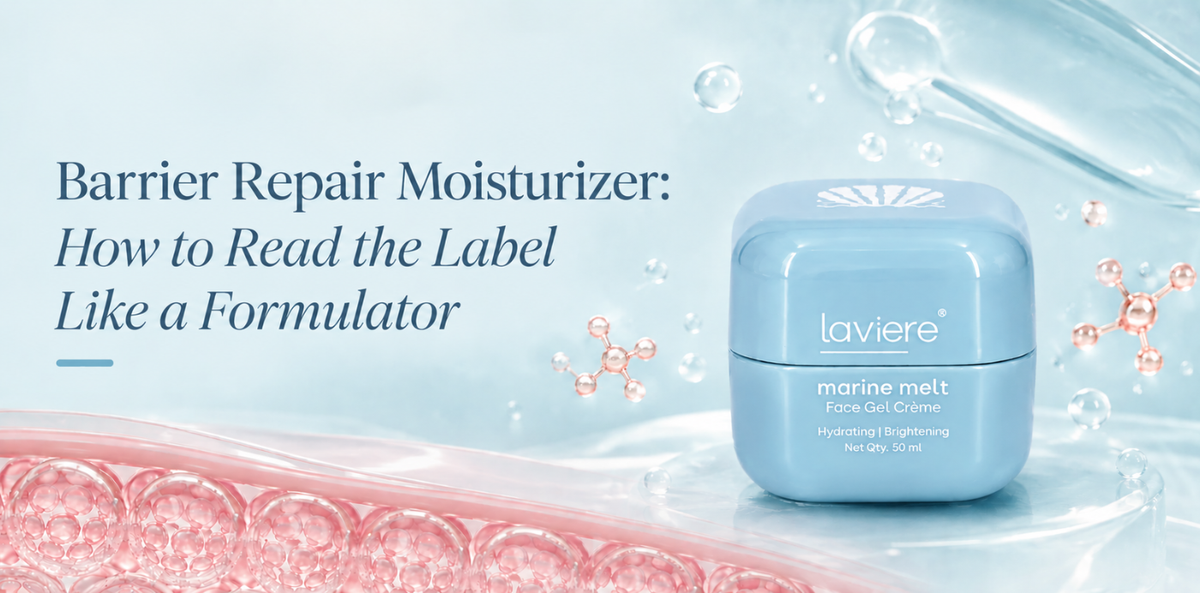
Follow it with Marine Melt, a gel crème that brings Ceramide 2 and hyaluronic acid together with CICA and Ectoin. For drier skin in winter, apply a slightly more generous layer, or use a richer cream over it on the driest areas. The Hydrating Combo is Laviere's pick for skin that feels thirsty, tight or tired.
Adjusting through the Indian year
Your skin's needs shift with the weather, and your routine can too.
In the monsoon and humid summer, a serum plus a light gel crème is usually enough, even for dry skin. In north Indian winters and dry climates, use the damp-skin method religiously, add a humidifier at night if you can, and consider a thicker moisturizer or a few drops of face oil on top. If you spend all day in AC, keep a hydrating mist at your desk and reapply moisturizer at lunch.
Mistakes to avoid
• Applying serum to completely dry skin in dry air
• Skipping moisturizer because the serum "feels hydrating enough"
• Using very hot water, which strips natural oils
• Piling on five hydrating layers when one serum and a good moisturizer will do
FAQs
Q Can I use a hydrating serum for dry skin twice a day?
Yes. Morning and night use keeps hydration levels steady, especially in dry weather.
Q Can hyaluronic acid make dry skin drier?
If it's applied to dry skin in very dry air without a moisturizer on top, it can feel tight. Apply it to damp skin and always seal it in.
Q: Do I still need a moisturizer after a hydrating serum?
Yes, especially for dry skin. The serum adds water; the moisturizer keeps it there.
Q: Is a hydrating serum good for dry, sensitive skin?
Usually, yes. Humectants like hyaluronic acid and panthenol are among the gentlest ingredients available.
A hydrating serum for dry skin works best as part of a team. Cleanse gently, apply it to damp skin, seal it in, and your skin will hold on to moisture far longer than you're used to.

Written by Madhu Tiwari