Barrier Repair Moisturizer: How to Read the Label Like a Formulator
Walk down any skincare aisle, and you'll see "barrier" printed on half the jars. Some of those products are genuinely built to help skin rebuild. Others are ordinary moisturizers with a trendy word on the front. Learning what a barrier repair moisturizer actually needs to contain means you can tell the difference in about thirty seconds and stop spending money on the wrong one.
If you're still working out whether your barrier is damaged at all, start with our guide on how to repair a damaged skin barrier on the face. This post is about choosing the product.
A quick refresher: what you're repairing
The outer layer of skin works like a brick wall. Skin cells are the bricks; lipids are the mortar. That mortar is roughly half ceramides, about a quarter cholesterol, and a smaller share of free fatty acids. When those lipids are depleted by harsh cleansers, over-exfoliation, sun, pollution, or dry air, water escapes and irritants move in.
A barrier repair moisturizer has three jobs: replace some of what's missing, help skin make more of its own, and calm things down while that happens.
The five things a good barrier repair moisturizer should have
1. Barrier lipids. Ceramides are the headline. On labels, they may appear as Ceramide NP, AP, EOP, NS (sometimes written as Ceramide 3, 6-II, 1 and 2). Cholesterol and fatty acids alongside them make the lipid support more complete.
2. Humectants. Hyaluronic acid and glycerin bring water into the skin. A barrier that's rebuilding still needs hydration to function.
3. Ingredients that help skin help itself. Niacinamide is the standout. Research has shown it increases the skin's own ceramide production, so it supports repair from the inside, not just the surface.
4. Something to calm inflammation. Centella (CICA), panthenol and allantoin are common choices. A stressed barrier is almost always a slightly inflamed one.
5. Protective support. Ingredients like Ectoin, an extremolyte made by microorganisms that survive extreme salt and heat, help protect cells from environmental stress, which is useful if pollution and sun are part of your daily life.
What a barrier cream doesn't need
High-strength acids or retinoids. These have their place, but not in the product meant to help your skin recover.
A heavy texture, necessarily. This is the myth that trips up a lot of people in India. Thick, occlusive creams make sense in very dry climates, but in humid weather they can feel suffocating, trap heat and clog pores. A well-formulated gel-cream can deliver ceramides, humectants and soothing actives without the weight.
Marine Melt, ingredient by ingredient
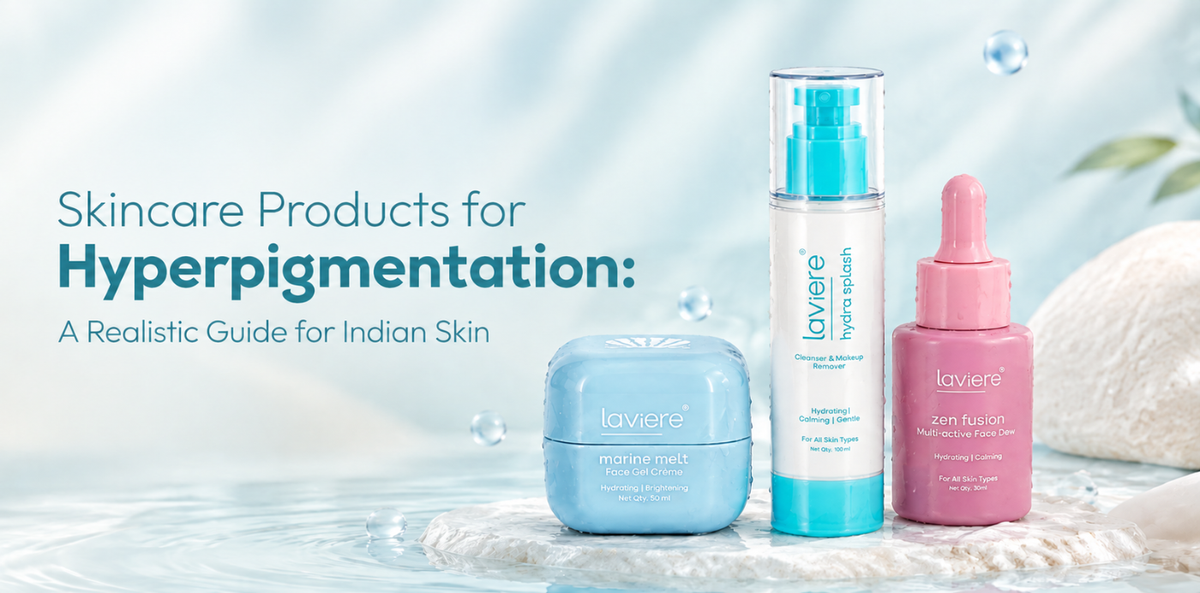
Marine Melt is Laviere's lightweight face gel-cream, and it's built around most of the checklist above. Here's what each key ingredient contributes:
|
Ingredient |
Role in barrier repair |
|
Ceramide 2 |
Supports the lipid "mortar" and moisture balance |
|
Hyaluronic acid |
Draws water into the skin for deep hydration |
|
Niacinamide |
Improves texture, reduces visible redness, supports ceramide production |
|
CICA extract |
Strengthens the barrier and calms irritation |
|
Ectoin Natural |
Protects skin from environmental stress |
|
Bicoalgae XT |
Supports skin resilience and rejuvenation |
|
Vitamin C and licorice |
Help brighten and fade the look of dark spots left behind by irritation |
It's suitable for all skin types, including oily and acne-prone skin, formulated to be non-clogging and dermatologically tested. The cooling, non-greasy finish means you can use it twice daily without it feeling like a mask.
How to use a barrier repair moisturizer for four weeks
Morning: Cleanse gently, apply your serum, then a thin, even layer of moisturizer. Finish with a broad-spectrum sunscreen.
Night: Cleanse, serum, moisturizer. If you have very dry patches, apply a second thin layer on those areas only.
For the first four weeks: Keep exfoliating acids and retinoids on pause. Let the moisturizer do its job on a quiet routine. Once your skin stops stinging and feels comfortable, reintroduce actives one at a time.
Give it at least two weeks before judging. Early wins are subtle: moisturizer stops stinging, makeup sits more smoothly, and your skin feels less tight by evening. Visible calm in redness and flaking usually follows.
If you'd like to test it first, Marine Melt Mini is a smaller size that's also handy for travel.
FAQs
Q Can a barrier repair moisturizer be lightweight?
Yes. Repair depends on ingredients, not thickness. Gel-creams with ceramides, humectants, and niacinamide can be very effective, particularly in humid climates.
Q Is a barrier repair moisturizer good for oily skin?
Yes. Oily skin can have a damaged barrier too, especially after acne treatments. Choose a non-comedogenic, lightweight formula.
Q : How long should I use a barrier repair moisturizer?
Daily, for as long as you like. Most people see their skin settle within two to four weeks, then keep using it as maintenance.
Q Do I need a separate barrier serum?
Not usually. A well-formulated moisturizer, a gentle cleanser and sunscreen cover the essentials.
The right barrier repair moisturizer is quiet and consistent. It won't tingle, it won't promise overnight miracles, and after a few weeks, your skin will simply feel like itself again.

Written by Madhu Tiwari