Article: Skincare Products for Hyperpigmentation: A Realistic Guide for Indian Skin
Skincare Products for Hyperpigmentation: A Realistic Guide for Indian Skin
A dark mark from last month's breakout. A patch of tan that never quite faded after Goa. Shadowy spots along the cheekbones that seem to get darker every summer. Hyperpigmentation is one of the most common skin concerns in India, and one of the most frustrating, because it's slow to fade and quick to come back. The right skincare products for hyperpigmentation can make a real difference, but only when you choose them for the type of pigmentation you have and use them patiently.
Why Indian skin is more prone to pigmentation
Hyperpigmentation happens when skin produces extra melanin in one area. Melanin-rich skin, which includes most Indian skin tones, tends to respond to triggers like sun, inflammation and hormones with a stronger, longer-lasting pigment response. That's why a pimple that leaves a pink mark on lighter skin often leaves a brown one on ours, lasting weeks or months.
The three types you'll most often see
Post-inflammatory hyperpigmentation (PIH). Brown or dark marks left behind after acne, bug bites, cuts, waxing or irritation. The most common type and the most responsive to skincare.
Sun spots and tanning. Uneven darkening from UV exposure, often on the cheeks, forehead and nose.
Melasma. Larger, symmetrical patches, typically on the cheeks, upper lip and forehead, linked to hormones, heat and sun (including visible light). Skincare helps, but melasma usually needs a dermatologist's plan.
The products that actually work
Think of your routine in layers, each with a clear purpose.
1. Sunscreen, every single day
No brightening product can outpace daily UV exposure. Without sunscreen, you're fading spots with one hand and creating new ones with the other. Choose a broad-spectrum SPF 30 to 50 with a high PA rating, apply two finger-lengths for the face and neck, and reapply if you're outdoors. For melasma, a tinted sunscreen with iron oxides adds protection from visible light.
2. A brightening serum
This is where the most targeted work happens. Look for ingredients with evidence behind them:
• Vitamin C and its derivatives, such as 3-O-ethyl ascorbic acid, which brighten and help fade dark spots
• Niacinamide, shown in studies to reduce the transfer of pigment to surface skin cells
• Licorice extract, a traditional brightening botanical
• Alpha arbutin, azelaic acid and tranexamic acid, other well-studied options
Zen Fusion combines 3-ethyl ascorbic acid and licorice with hydrators, peptides and Centella Reversa™, and is designed to reduce dark spots and even skin tone. Laviere notes that visible changes in pigmentation typically appear after four to six weeks of consistent use.
3. A barrier-supporting moisturizer
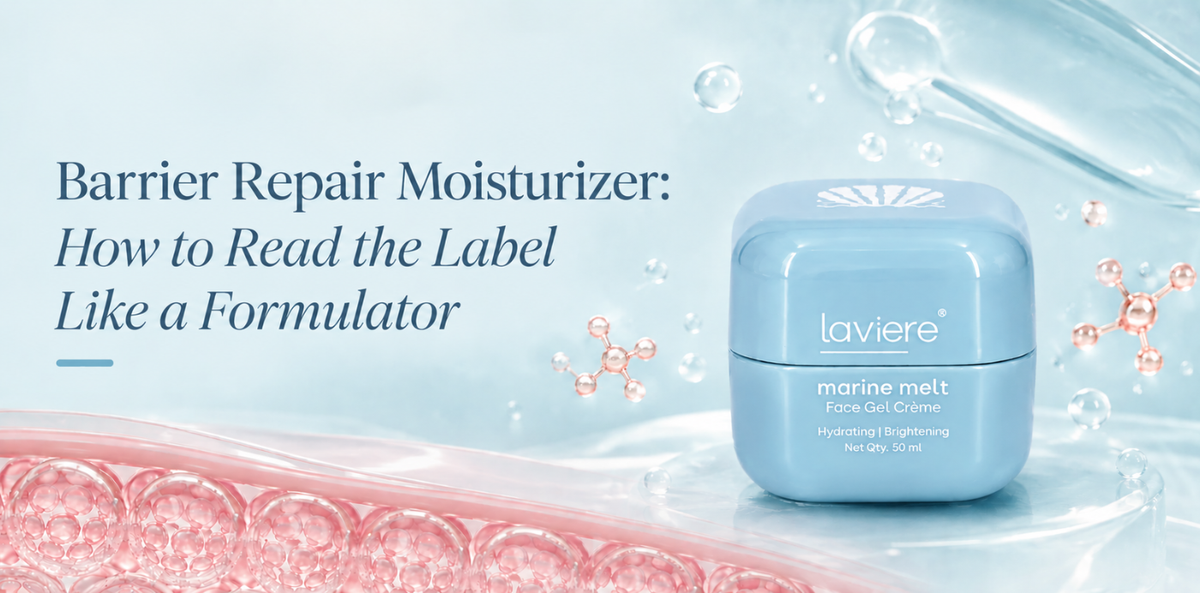
Irritation is one of the biggest causes of PIH, so a routine that inflames your skin can create the very marks you're trying to fade. A calming moisturizer keeps the barrier strong. Marine Melt adds vitamin C, licorice, and niacinamide to barrier-supporting ingredients like Ceramide 2, CICA, and Ectoin, so it helps on both fronts.
4. A gentle cleanser
Scrubbing dark spots doesn't lift them; it creates more inflammation. Hydra Splash is a non-stripping, hydrating cleanser that includes niacinamide and licorice, and the Cleansing Combo is Laviere's pairing for cleansing and brightening together.
5. Gentle exfoliation, occasionally
Once or twice a week, a mild chemical exfoliant can help speed up the shedding of pigmented surface cells. More isn't better. Over-exfoliation leads to irritation, which leads to more pigment.
When skincare isn't enough
For stubborn melasma or deep, long-standing pigmentation, a dermatologist may recommend prescription creams or in-clinic treatments like chemical peels. Please don't use steroid-containing "fairness" creams without medical supervision; they can cause serious long-term skin damage.
What to avoid
• Lemon juice, baking soda, and other DIY remedies, which can burn and darken skin further.
• Picking or squeezing pimples, which almost guarantees a mark
• Layering several strong actives at once
• Switching products every two weeks before they've had time to work
A realistic timeline
Most skincare products for hyperpigmentation need eight to twelve weeks of steady use to show significant fading, though you may notice a brighter, more even look sooner. PIH from a recent breakout usually fades faster than old sun damage or melasma. It helps to take a photo in the same spot, in the same daylight, every two weeks. Pigmentation fades so gradually that it's easy to feel nothing is changing when it actually is, and progress photos stop you from abandoning a routine just before it starts to pay off.
FAQs
Q Which skincare products for hyperpigmentation work best on Indian skin?
A daily sunscreen, a brightening serum with ingredients like vitamin C derivatives, niacinamide or licorice, and a gentle, barrier-friendly routine.
Q Can I use vitamin C and niacinamide together?
Yes. The old advice to keep them apart doesn't hold up for modern formulas.
Q Will dark spots come back?
They can, especially with sun exposure or new breakouts. Daily sunscreen is the best prevention.
Q How long do post-acne marks take to fade?
Anywhere from a few weeks to several months, depending on depth and how consistently you protect your skin.
Choosing skincare products for hyperpigmentation is less about finding a miracle and more about building a gentle, protective routine you'll stick with long enough to see it work.

Written by Madhu Tiwari